Off-Grid Battery Options
Lead-Acid
Until recently, traditional lead-acid deep cycle battery systems were the most common and reliable option for off-grid systems. Lead-acid batteries are a proven technology and can last up to 15 or more years if they are not held at elevated temperatures (above 40 degC), and are not regularly discharged too low. Lead-acid batteries require precise battery charging following a specific charge cycle plus temperature sensors to adjust voltage settings.
Most well known off-grid inverter/chargers offer programmable charge voltage settings along with sensors to precisely charge under all conditions. Lead-acid deep cycle batteries are still widely used and offer several advantages over lithium.
Lead-acid deep cycle battery options – 2V, 6V or 12V options and various types – Gel, AGM, Flooded
One of the most significant benefits of lead-acid batteries is unlike modern lithium batteries; the battery will not shut-down at a low voltage or low state of charge (SOC). This is important, especially in emergencies or when a backup generator fails.
Lead-acid batteries can be discharged down to 0% state of charge if needed for backup, but it is not recommended as it can severely reduce the life of the battery.
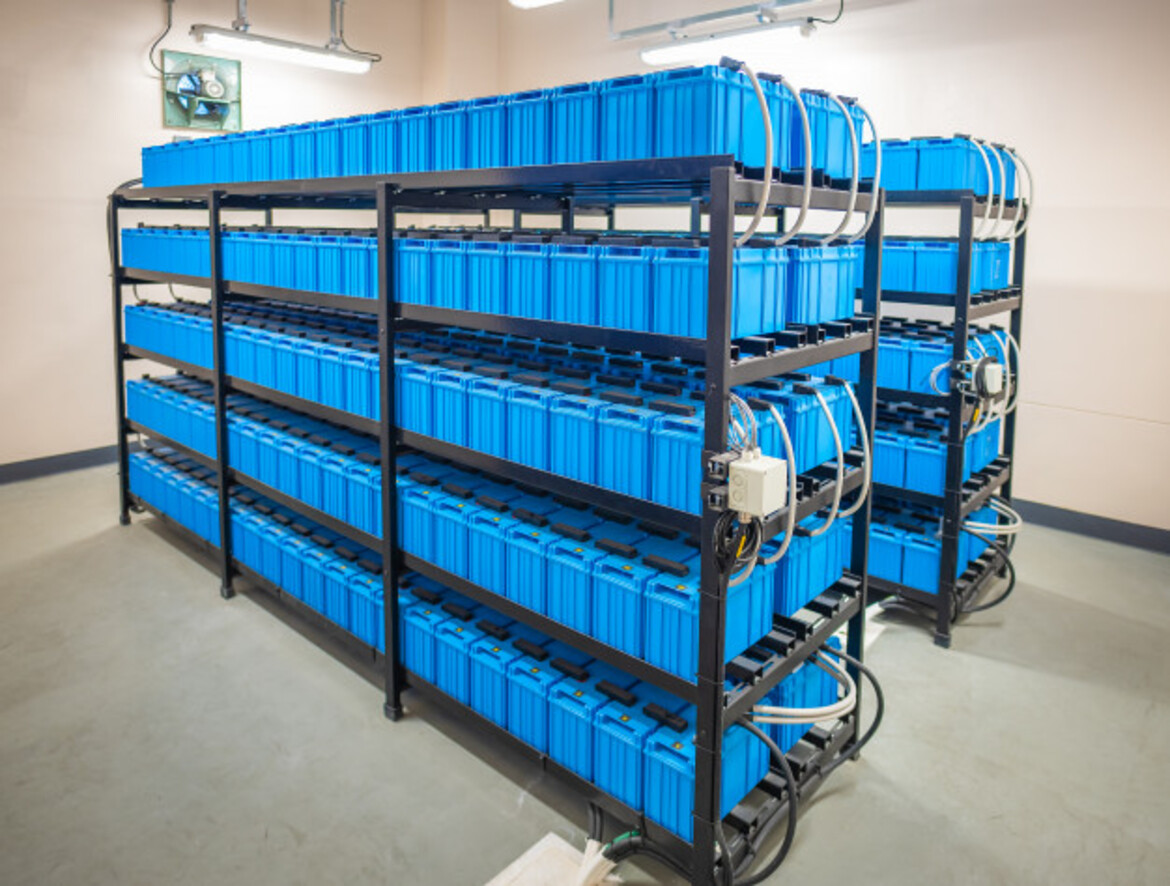
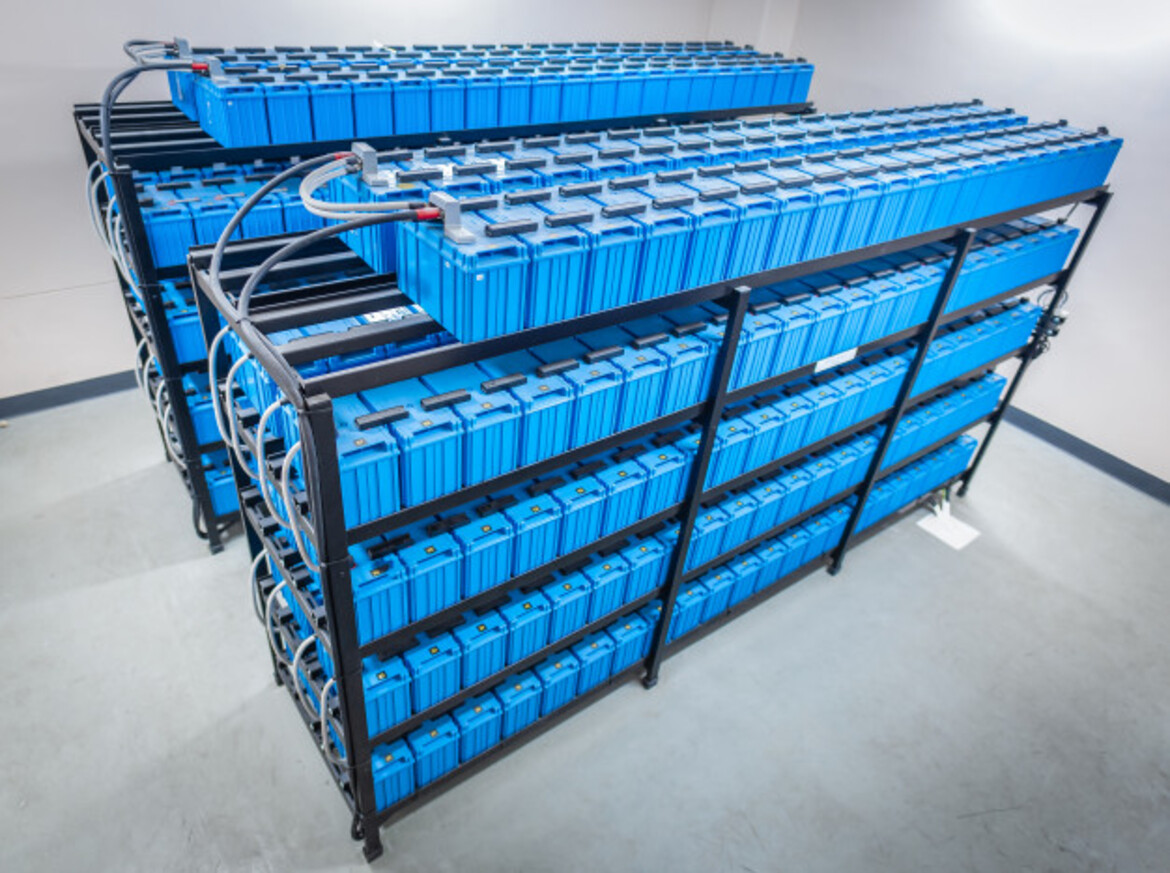
In certain applications high performance lead-acid batteries are still an excellent choice for off-grid systems. Lead-acid is a well proven and reliable technology which is compatible with virtually all off-grid inverters and solar charge controllers. Lead-acid battery banks can also be more reliable in some situations as the battery will not automatically shut down in extreme temperatures or when low state of charge is reached. In addition, they can be easily recycled using existing infrastructure.
Advantages
- Compatibility with most inverters.
- Proven and trusted technology.
- Safe, very low risk (sealed Gel/AGM).
- Battery will not cut out at low voltage**
- Long life (if not over discharged)
- Easily recycled.
Disadvantages
- Lower efficiency – around 80%
- Low energy density – Very heavy
- Usable capacity limited – Max 40% DoD on regular basis
- Not modular – Fixed size once installed
- Cannot sustain partial state of charge for long periods
- High temperatures can drastically reduce battery life
** Cutout voltage & SOC based on inverter settings and rate of discharge
Lithium-Ion
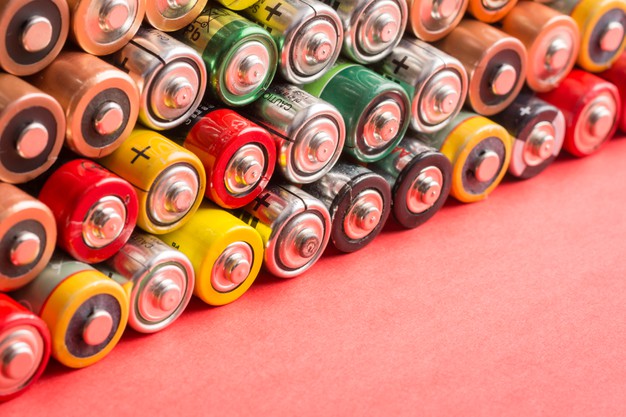
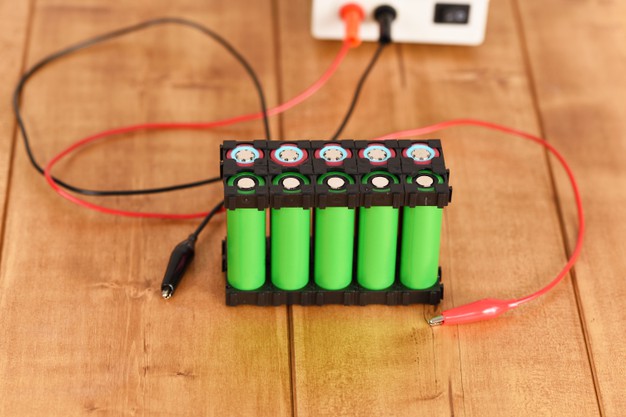
More recently lithium-ion battery systems have become extremely popular due to the high efficiency (92% to 98%), compact size, lightweight and scalability. In contrast, lead-acid battery banks have a fixed size or capacity whereas lithium systems do not suffer this limitation. This flexible sizing allows for additional capacity to be added at a later stage, which is a real bonus for both installers and customers alike.
Lithium batteries have a much higher energy density compared to lead-acid and are therefore lighter and more compact. A huge advantage of lithium is the ability to sustain a low state of charge (partial state of charge) for a prolonged amount of time without any negative effects such as sulfation which is a common problem with lead-acid batteries. Also, extremely high charge rates can be achieved using lithium with charging times up to 70% faster than lead-acid.
Advantages
- Very high efficiency – Approx 97%
- Very high energy density – Compact and Lightweight
- High charge and discharge rates allowed
- No degradation issues with partial state of charge
- Modular and scalable systems (upgradable)
- Safe and low risk (if charged correctly)
- Most lithium batteries come with above 5 years warranty
Disadvantages
- Can shutdown at high temperatures (45+ degC)
- Can shutdown at low temperatures (below 5 degC)
- Can ‘trip off’ under continuous high surge loads.
- More difficult to recycle at end of life.
- May not function without a compatible inverter.
The Heart Of An Off-Grid System – The Battery Inverter/Charger
Modern off-grid solar systems use multi-mode inverters/chargers to manage batteries, solar, and back-up power sources such as a generator. The inverter/charger is the central energy management unit and can be either AC coupled with solar inverter/s, or DC coupled with solar charge controller/s, or both. Read more about AC and DC coupled systems here.
Early off-grid systems used basic battery inverters and were very simple in comparison as the battery charger was a separate unit. These simple inverters generally had low power rating below 2kW and thus were only capable of powering low energy appliances like lights, fans and small pumps.
little more a is well worth it for the power and features needed for a reliable off-grid system. The impressive features and high performance
DSP SOLAR SINE basic specifications
- Type: Multi-mode Inverter/charger (AC or DC coupled)
- Use: Solar storage, back-up (UPS), off-grid
- Sizes available (power output): 1.0kW, 2kW, 3.0kW, 5kW,7.5kW
- Battery System Voltages:12V,24V, 48V, 72V,96V&120V
Highlight
- Very high surge power output (3 x rated cont. power)
- Battery sense monitoring and mid string sensor for precise battery charging (lead-acid Gel and AGM)
- Managed AC coupling
- Very powerful software package
- Unique pre-charge feature for safer start-up
- AC / DC coupling capability