Off Grid & Hybrid Solar Sine UPS
Choosing the best off-grid solar system is not easy as off-grid systems are many times more complicated than common grid-connected solar systems. In this article, we highlight some of the many considerations which must be taken into account and discuss the various off-grid system types available.
We also explain why a good quality ‘inverter/charger’ is vital to building a reliable off-grid system
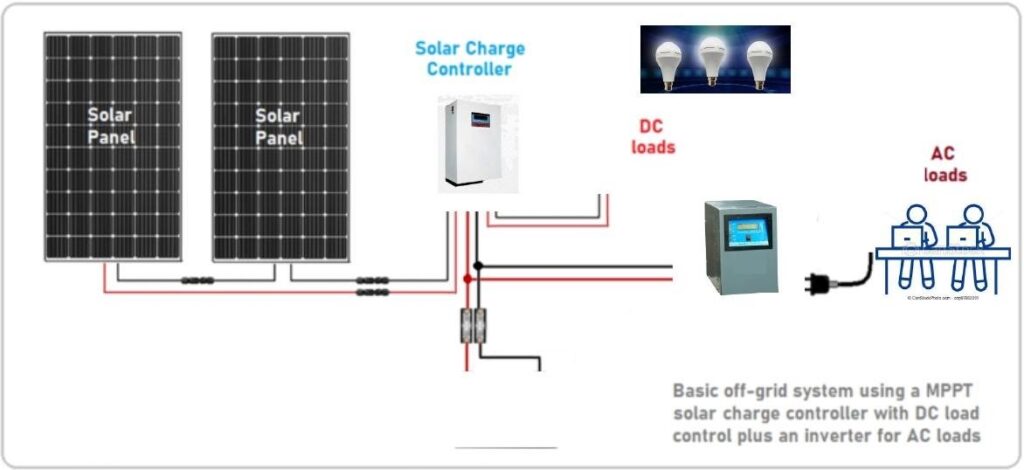
Basic layout of a DC coupled off-grid system – The most versatile and modular off-grid configuration
Many people believe off-grid solar systems can be easily put together. This may be true in the case of a small caravan or cabin, but in reality, larger off-grid systems used for homes and businesses need to be carefully designed by an experienced solar installer or system designer.
Solar and battery storage systems must be installed by an experienced licensed electrical professional. Modern large scale off-grid solar systems are typically high voltage and can generate and store huge amounts of energy which can result in damage, fire or serious injury if the installation does not meet all relevant regulations, standards and guidelines.
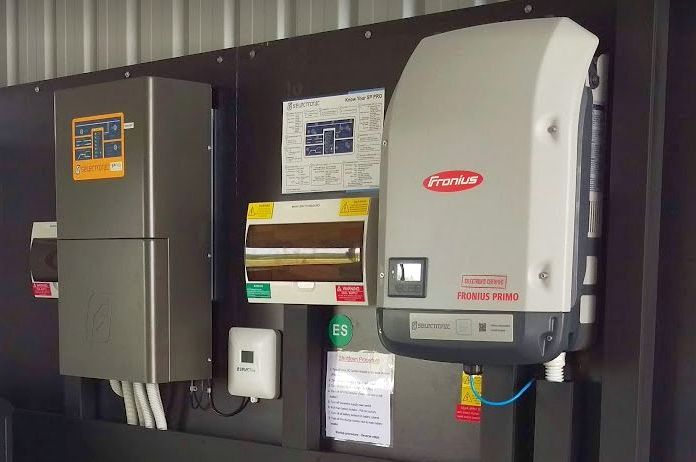
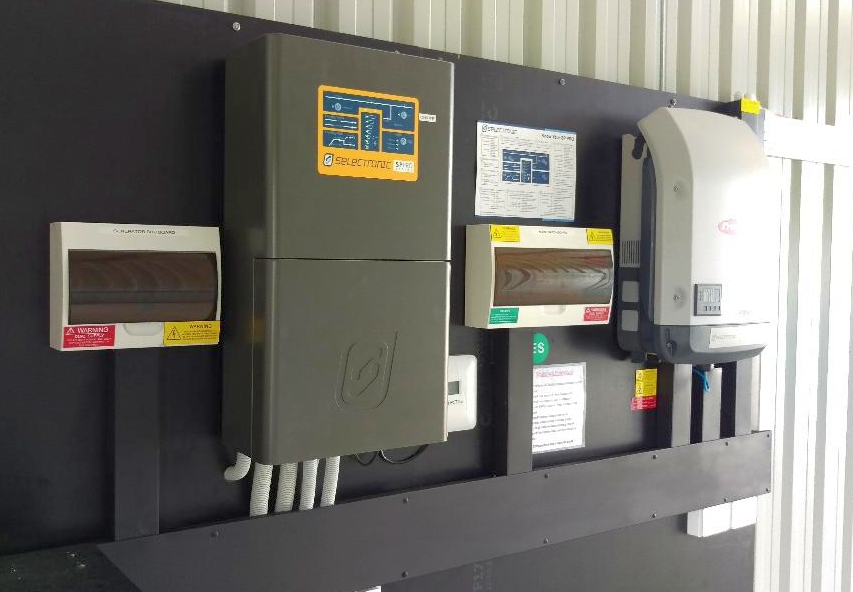
Off Grid System Types (AC or DC coupled)
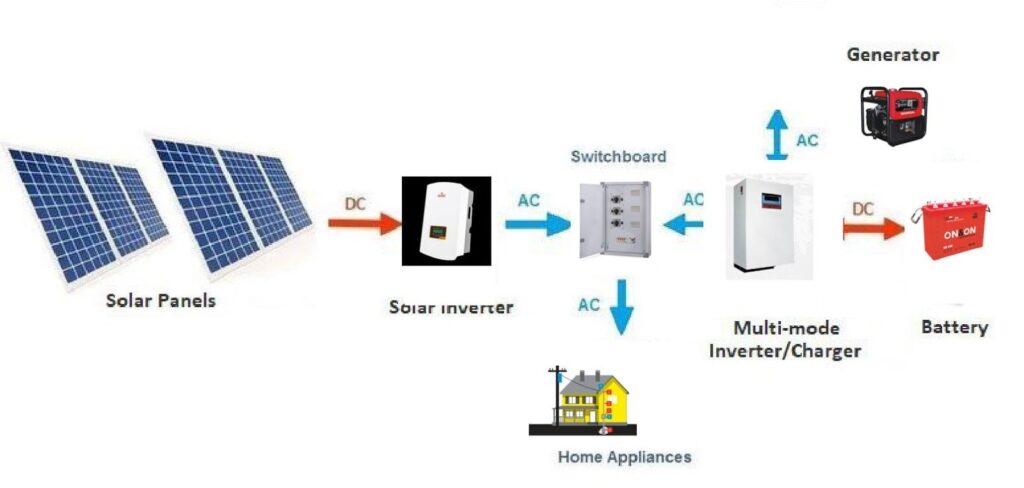 Larger off-grid systems can be either AC or DC coupled depending on the type of inverter/charger (multi-mode inverter) used, and the compatibility with different solar inverters (AC) or solar charge controllers (DC). Most modern multi-mode inverters can be both AC and DC coupled, which creates a very secure, flexible system with multiple charging options.
Key considerations when sizing off-grid solar systems
- Daily average energy consumption (kWh) – Summer and winter
- Peak load (kW) – Maximum power drawn from appliances
- Average continuous load (kW)
- Solar exposure – Location, climate, orientation & shading
- Backup power options – During poor weather or shutdown