Hybrid System Types – Technical Guide
Hybrid systems generally fit into one of four main categories
- Basic hybrid inverters (no backup power)
- Multi-mode hybrid inverter (with backup power)
- All-in-one battery energy storage systems
- Advanced AC-coupled systems (off-grid or hybrid)
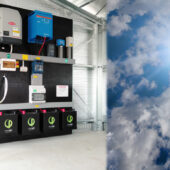
The most economical hybrid solar system uses a simple hybrid inverter which contains a solar inverter and battery inverter/charger together with clever controls which determine the most efficient use of your available energy.
The larger BESS systems are basically a hybrid inverter together with a lithium battery in one complete package, usually about the size of a fridge. However like most appliances there are many features and capabilities which differentiate the wide variety of hybrid systems available.
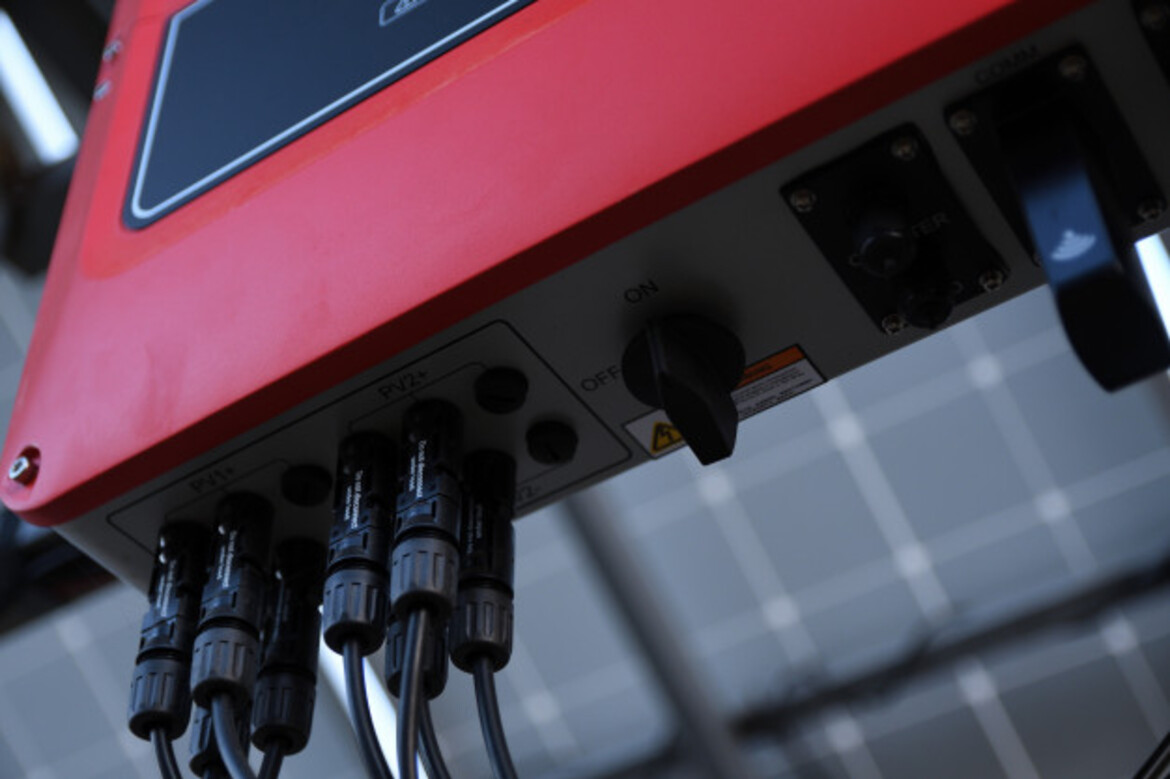
Basic hybrid inverter (no back-up)
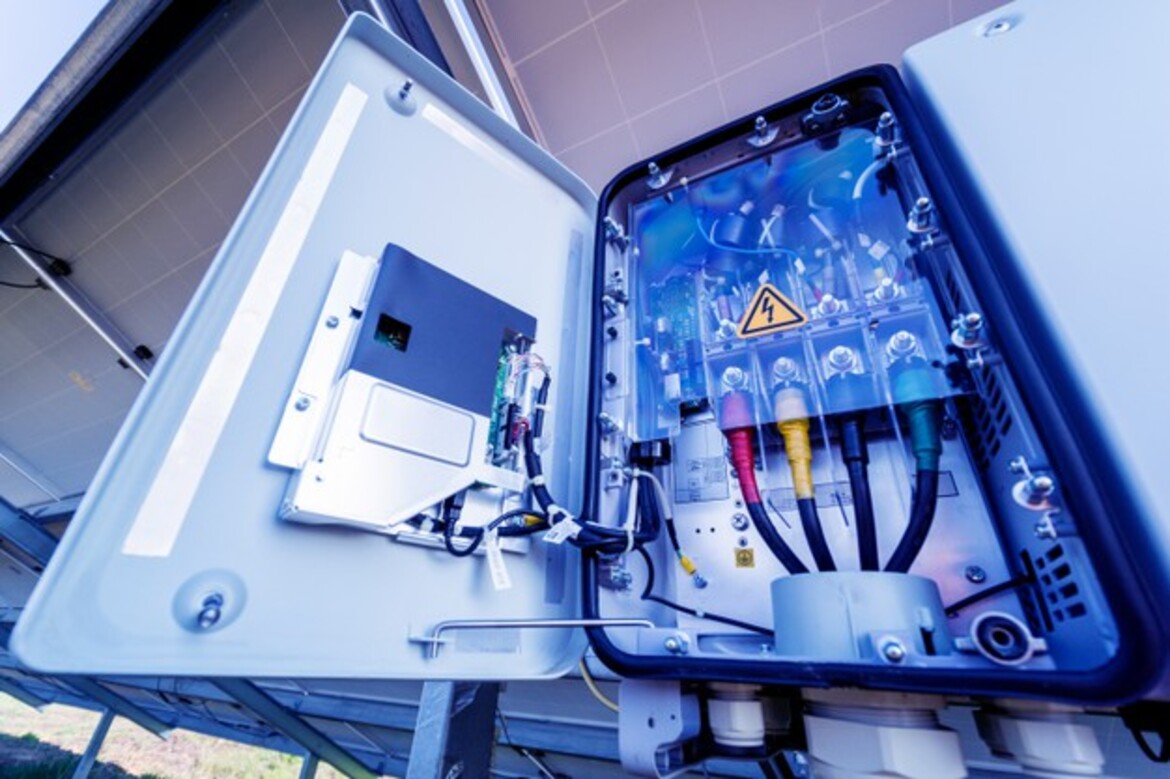
This is the most basic kind of hybrid solar inverter and works much like a grid feed solar inverter but also enables storage of solar energy in battery system for self-use.
The main disadvantage of this type of Inverter is that is does not contain a grid isolation device which means it cannot supply power when there is a blackout (commonly known as an uninterruptible power supply or UPS function). If grid stability is not an issue then this simple hybrid inverter would be an good economical choice.
Multi-mode hybrid inverter with back-up
The more advanced hybrid inverters also known as multi-mode inverters, have back-up power capability either built-in or as a separate add-on unit. Under normal operation it can supply power to the home (designated power circuits), charge the batteries and excess power can be fed into the grid.
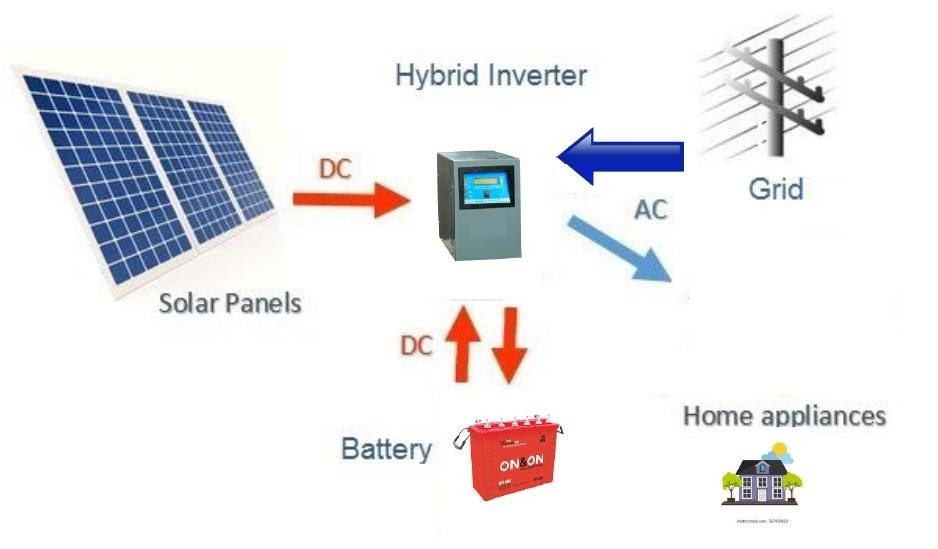
If there is a blackout or the grid becomes unstable the unit will automatically switch over to battery supply and continue to operate independently from the electricity grid (in usually less 1 to 3 seconds). Some hybrid inverters have instantaneous backup like the Redback hybrid inverter in the video below but most of these systems have very limited backup power ratings so only basic circuits like lighting and a fridge can be used during a blackout.
All-in-one battery energy storage system
A more recent trend is to package hybrid inverters together with a battery system in one complete unit. This is technically this is known as a BESS or Battery Energy Storage System which can be retrofitted to home with an existing solar system. These systems are available in a variety of sizes and are usually about the size of a medium fridge.
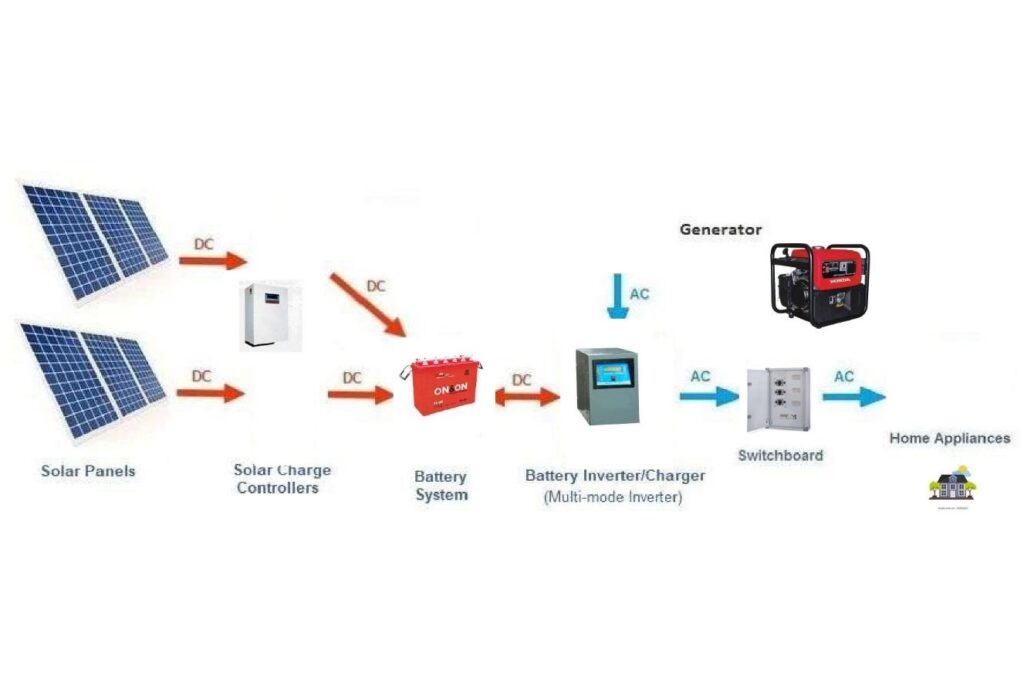
Until recently (before cheaper hybrid inverters) most hybrid systems consisted of two different inverters which worked together to form what is known as an AC coupled system; a standard solar inverter and a sophisticated interactive or multi-mode battery inverter.
The Solar inverter can be any standard unit but it is usually either the same brand or is compatible with the interactive inverter to optimise battery charging.
Key features of an AC coupled system
- Powerful battery inverter to supply continuous high loads
- Advanced multi-stage charger for lead-acid or lithium batteries
- Automatic AC transfer switch (UPS function) built-in
- High surge load capability
- Can also be used for high end Off-grid power systems
- Load shifting and advanced energy demand management